Cleaning scope
Define target blocks, method, route, timing, stop conditions and proof of task completion. Decide how excluded modules, obstacles and interrupted runs will be marked.
Inspection / evidence and handoff
Cleaning and inspection may share a route, but they are not interchangeable tasks. A useful system makes clear what it records, what it cannot establish and who interprets the result.
A robot can travel past a module, apply a cleaning action and record aspects of its own operation. Depending on system design, it might also collect images or sensor readings. None of those facts alone proves that every module is clean, that the installation has been comprehensively inspected or that a visible feature has a particular electrical cause. The strength of an observation depends on coverage, viewing conditions, calibration, recording method and competent interpretation.
The operational value lies in a dependable handoff. Identify what was seen, where it was seen, when it was seen and under what conditions. Preserve the relationship between an observation and its location. Then route it to the appropriate person or procedure rather than treating an alert or image as a conclusion.
Define target blocks, method, route, timing, stop conditions and proof of task completion. Decide how excluded modules, obstacles and interrupted runs will be marked.
Define the question the inspection is meant to answer, the permitted method, qualifications or interpretation required, coverage and records. Do not quietly expand a cleaning task into an inspection claim.
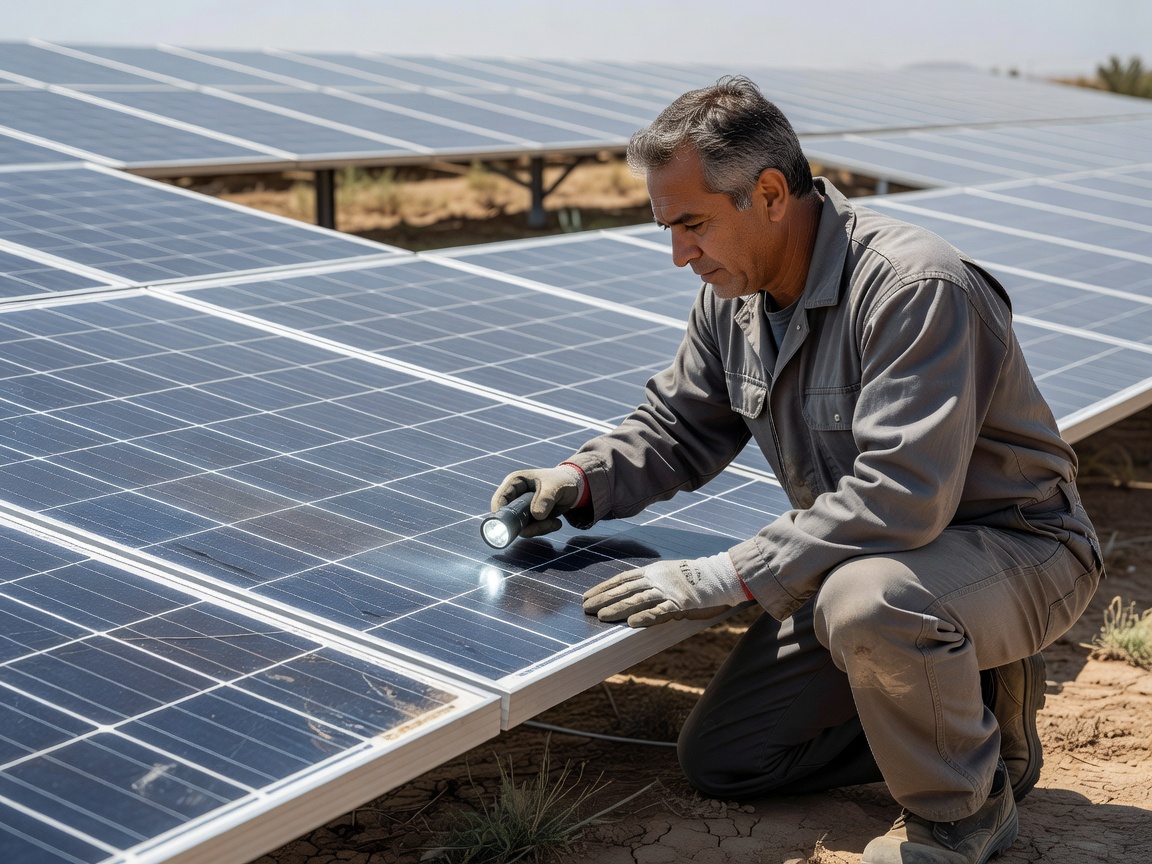
A finding without a useful location can consume time without helping a crew respond. Agree the site's row and module naming convention before work begins. If equipment uses coordinates or internal identifiers, document how the operations team maps them to site records. Retain date and time, equipment identity where relevant, work area, weather context and the person or system that created the record.
Images should be repeatable enough to compare and should not create a false impression of certainty. Capture relevant context as well as close detail where appropriate, and keep records in the site-approved system. Treat personal information, security-sensitive views and retention rules according to the site's policies.
Dust, glare, shadow, condensation, soiling, reflections and camera angle can change what an image reveals. A sensor optimised to guide a cleaner may not be designed to evaluate cell condition, electrical performance or every physical feature. A missed image is not evidence of an absence, and a flagged variation is not automatically a fault. Consider coverage and conditions before interpreting results.
Thermal, electrical and visual assessment each have their own use cases, equipment, conditions and competent-person requirements. A cleaning robot's presence does not replace procedures that specify how those assessments should be undertaken. Where a finding suggests a safety concern, follow the site's established escalation and isolation processes rather than improvising a response at the array.
| Stage | Record | Handoff question |
|---|---|---|
| Before pass | Work area, initial condition, constraints and agreed task | Are cleaning and inspection expectations distinct? |
| During pass | Route, stops, exceptions and observations with location | Who receives an operational alert or safety concern? |
| After pass | Completion evidence, residue or unresolved areas | Does any observation need qualified review? |
| Review | Outcome, follow-up action and record owner | What changes before the next scheduled task? |
A large number of detections is not the same as a useful inspection. Agree categories and escalation thresholds with the people responsible for site operations. Keep uncertain observations labelled as uncertain, and do not turn an equipment notification into a performance conclusion. A clear, modest report that preserves location and context can be acted on more reliably than a dramatic label without evidence.
Review the process after a trial or a material change to equipment, module layout or reporting software. Ask whether records arrive where expected, whether locations can be found in the field and whether teams can distinguish completed work from unresolved exceptions.
Plan site operations Read common questions